Pink Slime: on racist reporting of anti-racist student activism

guests-eating2_465x325

From Bon Appétit’s website: “And good luck locating Indian food as authentic as what our eBay and Google guests enjoy at our cafés at any other workplace.”

Popular media is determined to present the national student body as a generation of spoiled brats. Pundits cherry-pick and decontextualize stories from student papers, presenting individual campus struggles to a scandalized public as symptoms of the collapse of moral character. It is no wonder that activists at the University of Missouri attempted to exile the press from their fall 2015 demonstrations. Journalists are not what they were in the 1960s. The few who have the resources, drive and ability to report a story are far outnumbered by the flock of sneering bloggers who supply Facebook and Twitter feeds with rhetorical pink slime.

Take recent stories about student questioning of Oberlin College’s dining options. Oberlin’s dining services are provided by Bon Appétit Management Company, a food services corporation that brands itself as socially progressive through its use of “locally sources/humanly raised” product, etc. They operate “650 cafés in 33 states, with dozens of marquee clients.” Students complained that much of the international fare on Appétit’s menu is more appropriative than authentic. (One of the offending menu items is a pulled pork sandwich served on ciabatta with cold slaw, presented as Banh Mi). They asked to sit down with those designing the menu, in the interest of improving it. Their complaint to the campus dining service was reported by the school’s paper, the Oberlin Review. That article led to a New York Post headline which declared, “students at Lena Dunham’s college offended by lack of fried chicken.”

This is not an unusual path in the development of a story. College campuses have long served as inspiration for collective finger wagging. Student art projects, sit-ins, course ideas, new majors, experimental pedagogy can be trusted to make headlines during a slow week.

One might see in this story an interesting conversation between international students, Oberlin staff and Bon Appétit, a national food service corporation that uses social consciousness as a marketing tool. One might spy a story about the flattening of campus culture by the delocalized corporate management of student life. Life at one liberal arts college looks increasingly like life at every other liberal arts college because, nationally, a handful of corporations produce all aspects of student life. These corporations promise to make life on college campuses “better,” but in doing so they make it more uniform. That uniformity includes the translation of diversity into easily produced and consumed menu-items. This, the use of diversity as a marketing device, was actually the focus of Clover Lin Tranh’s November 6 story for The Oberlin Review. The exchange between students and staff at Oberlin is, in fact, typical of college life. For people working in student affairs, it’s hardly newsworthy. It is a basic workday.

In their earnest idealism, student activists are vulnerable to judgment from a cynical public. Today, the latter is more interested in the problem of student entitlement than it is in the crisis in public education. If Oberlin students seem “spoiled,” it is because the overwhelming majority of students in this country are served salt-cured ambiguous animal protein soaked in grease — and the public accepts this, just as it accepts in strip-mining of the national curriculum and the degradation of teaching. It is pink slime everywhere in our schools — those of us who teach college are now used to students who have never been inside a library, and whose progress in their degrees is hampered by their need for remedial writing and math. Those remedial needs, by the way, are generally met by adjuncts — by teachers working part-time with no health or retirement benefits, who have no say in campus governance and no pathway for career advancement.

One might understand individual stories of student activism as confrontations with the difficulty of recognizing and working from difference. Differences in cultural practices of hospitality are an important threshold for conversations about race, ethnicity, nationality and religion — especially within the context of a residential campus. One might assume that students are translating into collective action some of the material they are learning in the classroom, and that they want to make the campus a more interesting place to live. Instead, popular media dismisses students as entitled monsters.

Teachers and staff members who work with students know that the college campus has always been, by definition, a community dedicated to struggle — education is, always, hard work, and it is a collective undertaking. Each class of students will hold the campus to a new, different, and evolving standard calibrated to their needs and ambitions. Faculty and staff negotiate with these needs and ambitions. That is our job. Today that job includes suffering through the blunt force of popular media’s racism, which would have the reader believe that earnest anti-racist activism is the real problem, and not the brutality of the profoundly racialized forms of class warfare that render student struggles for equality into a form of entitlement.


NOTE: Normally I write about sports here but every now and again I have other thoughts.

Serena’s Pose

all hail the Queen

Of course this is a controversial image.

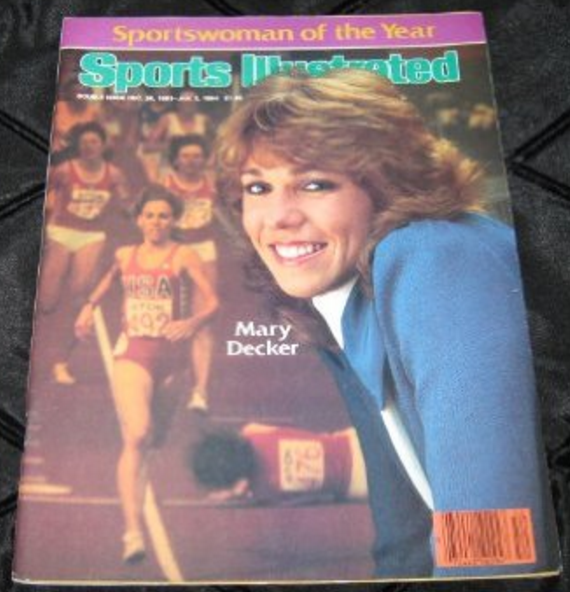
The last women to grace this particular SI issue solo were “American Sweethearts” Mary Decker (1983) and Chris Evert (1976). Decker’s photo layers a portrait of the runner in her street clothes over another image of her finishing a race. She leans into the picture, her body excised by the image’s frame. She is dressed like a pretty suburban mom in a monochromatic jacket and turtleneck. Her pose and her expression suggest a woman embarrassed to be taking up even the space she occupies here. Sorry! she says with a smile.

Mary Decker SI cover 1983

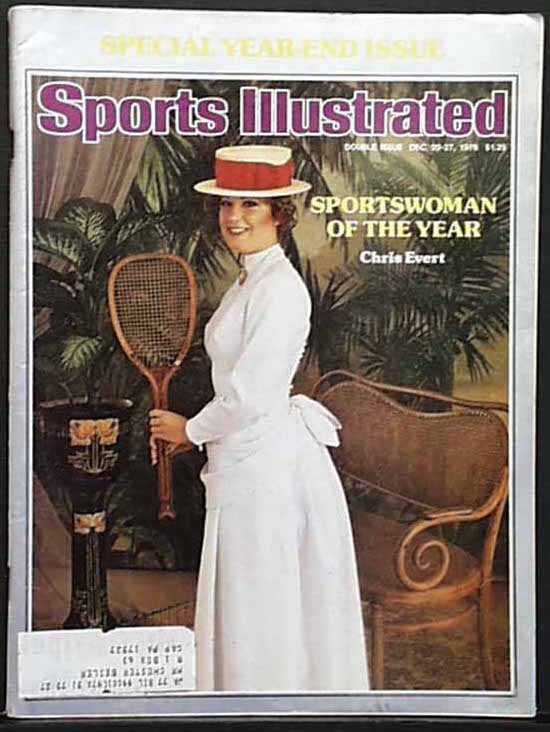
This is, actually, light years ahead of the cover for the 1976 issue of SI dedicated to Chris Evert. There is no way on earth Serena Williams isn’t acutely aware of this photograph.

chris evert SI 1976

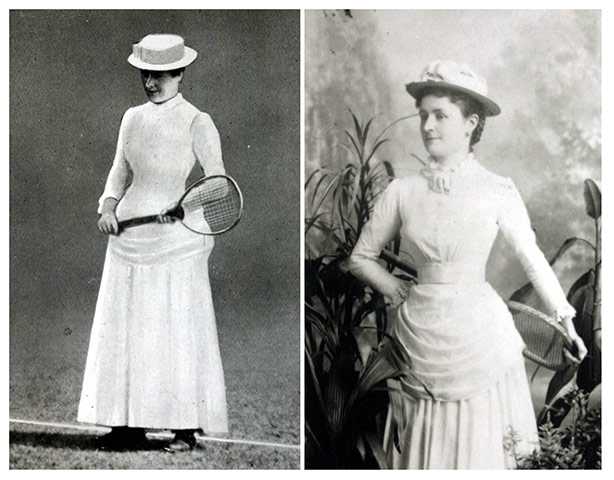
Evert is wearing the kind of restrictive tennis costume women players were forced to wear, in another century. She does not look like she has just walked off a tennis court. She looks like she just fell into an Edith Wharton novel. She is the picture of a proper white lady.

Maud Watson 1884

The 2015 issue is notable for oh so many reasons. Among those reasons is the way the cover sidelines the issue of gender difference and also foregrounds it. Gender difference is always a problem for women athletes who must both demonstrate that yes, they are women and apologize, as women, for existing. This cover image is assertive and unapologetic about Serena as a sexual subject.

The title of the award itself has been loosened from gender — this year it is “sportsperson” instead of  “sportswoman.” This is a signal: things are getting more interesting. In years past, even in the context of issues dedicated to more than one athlete — e.g. 1984’s issue, celebrating Mary Lou Retton and Edwin Moses or 2011’s issue dedicated to Pat Summitt and Mike Krzyzewski — the awards were titled “Sportsman” and “Sportswoman” of the year.

The thing about that word “sportswoman” is that it asserts a regime of femininity, at the expense of the athlete’s sexuality. It reminds us that the entire world of sports is segregated, and that its rituals tend to body forth contradiction, ambivalence and anxiety regarding just what that segregation is about.This is how one arrives at the idea of putting Cris Evert in Edwardian Lady Drag. That outfit is not about asserting her athleticism or her sexual power. It is, in fact, about restricting both. It is about framing her body within the gendered architecture of restricted movement.

Sexuality, in Serena’s cover image, pushes back against the raced and classed codes of femininity that govern the “proper” presentation of women athletes around the world. In this image, sexuality is freed, if you will, from the discourse of gender difference which evacuates all signs of strength and power from the feminine subject. That, of course, is entwined with racist discourse which figures a black woman’s sexuality as excessive, and as “unfeminine” and in which a black woman’s athleticism appears as some kind of interference with her womanliness — indeed, with her humanity.

A number of writers defend Serena’s cover image as a celebration of her femininity. But this is only part of that image’s story. For what is her femininity? The fuck-me heels? The spread of her legs? The dare in her expression? Femininity is a very poor word for Serena’s styling, pose and posture here. The proper feminine subject, for example, does not spread her legs for anyone. She does not wear shoes like that. She wears more clothes. Especially if she is an athlete, she makes herself look demure, or sexless.

I see, in this image choice, the ghost of Evert’s corset, re-presented here within the language of sexual domination.

all hail the Queen

Here, Serena gives us a glimpse of her sexual power. This portrait is intentionally sexy. It is dominating. She is the master of her sexual power, and in this context, that mastery is a shiny reflection of the control she has over her athletic power. With this image, she asserts that she will do exactly what she want to do, and that this is, in fact, also what we want her to do.

Shizu Saldamando takes on Serena Williams

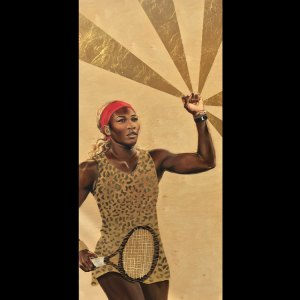
Saldamando La Serena

Shizu Saldamando, La Serena (2015). Oil, mixed media on wood panel.

La Serena, a beautiful portrait of Serena Williams by Los Angeles artist Shizu Saldamano, is currently on view at New Image Art in Santa Monica, CA, as a part of the group exhibition “The Thrill of Victory The Agony of Defeat: Sports in Contemporary Art.” Curated by Patrick Martinez, this exhibition also features work by Martinez, Gregory Bojorquez, Hiro Kurata, Mark Mulroney, Andrew Schoultz, Vincent Valdez, and Mario Ybarra Jr. I recommend seeing the show: all of these artists make very interesting work.

Saldamando, the only woman artist in this group exhibition, is (I understand) the only artist to take on the female athlete as a subject (I haven’t seen the show yet). The marginalization of women’s sports, as I’ve argued elsewhere, mirrors the wildly disproportionate scale of men’s sports as the subject of media broadcast and attention.* This goes to some of the things that make Saldamando’s work particularly interesting.


First, Serena Williams is a kind-of exception to the rule I described above. She is one of very few athletes to transcend the awfulness of mass media’s active suppression of public awareness of women athletes. The attention of a racist and sexist media, however, has mixed effects for black women athletes. The Williams sisters have been very savvy (and circumspect) in their navigation of that world, which exalts them and then tears them apart. That lifting and crushing is, of course, how mass media attention works. But the media’s wheel of fortune turns on a racist and sexist axis. Many portraits of iconic black athletes take this up, directly or indirectly. Consider, for example Keith Piper‘s installation Transgressive Acts: A Saint Among Sinners/A Sinner Among Saints (1993-1994), a twinned portrait of Muhammed Ali and Mike Tyson. They are honored, here, in the style of stained glass windows in a chapel, on whose pulpit is a copy of Ralph Ellison’s novel Invisible Man.

In La Serena, Saldamando gives us a deliberately iconic image—the use of gold, for example, marks this work as hagiography. Serena is not just victorious, she is exalted. The portrait vibrates with the weird story of Serena Williams’s recent upset, however. This year, in the semi-finals of the US Open, a completely unspectacular player, Roberta Vinci, brought Williams’s supposedly inevitable Grand Slam triumph to a brutal stop. In advance of this tournament, the press was unrelenting in its presentation of Williams’s triumph as a certainty. This, of course, feeds the media economy which needs saints to burn at the stake.

La Serena’s gesture, at least for me, expresses an awareness of the athlete’s future struggle. La Serena’s composure — her calm, her strength, her power and defiance — might easily have been lifted from communist or labor movement works celebrating women workers (see below). It is, however, also a citation of the most famous sport spectacle of them all — Tommie Smith and John Carlos’s protest from the medal stands at the 1968 Mexico City Olympics. This image belongs to a pool of images of defiance — portraits of resistance, defiance and protest.

tsjc

In this photograph, one of most famous and powerful images in sports history, Smith and Carlos’s hands are raised straight up, and their heads are bowed.** In Saldamando’s portrait, Serena is looking forward, toward a future that she creates. She raises her fist, but she also flexes her muscles. The artist maximizes our access to her physical power, and the metaphysical meaning of that power. La Serena contributes to an archive of images celebrating women’s power — these images differently engage and resist the ideologies of race, sex and gender that circumscribe women’s access to her own body. Some images (Norman Rockwell’s, for example, pictured below) render the working woman’s muscular body into something folksy and hypermasculine; others feminize the woman flexing her muscles (making her muscles disappear) — how and why embodied strength appears in these images is complicated. Michelle Obama’s arms, Dyana Nyad’s (captured below in a portrait by Catherine Opie), Serena Williams’s — each appearance of a woman’s muscular strength reaches from the image into the world to shake things up.

Black women, in particular, find their bodies read through a vicious matrix that pathologizes any sign of power and defiance. Her blackness appears, within racist ideology, as a disruption of gender. This form of racism flourishes around the figures of women like the Williams sisters — by which I mean black women who are among the very best women athletes alive. Their success as athletes becomes a sign of their always-already failure as women. Thus the social media trash-heap is sprinkled with videos, blog-posts that argue that Serena Williams is, in fact, actually man [I refuse to link that racist/sexist garbage]. In that world, her arms are stolen by a frightening army of fascist lunatics who see them as evidence that she isn’t, really, even human.

Saldamando’s La Serena calmly turns that shit into gold.


*Most group exhibitions centered on sports don’t feature any works centered on women athletes. So kudos to Martinez for including Saldamando’s portraits of Serena Williams and Kristi Yamaguchi.

**Note: Peter Norman [left] was an ally in this gesture. He is wearing a pin supporting the Olympic Project for Human Rights and willingly absorbed the controversy surrounding his participation this moment.

On Holly Holm Giving Us What We Need

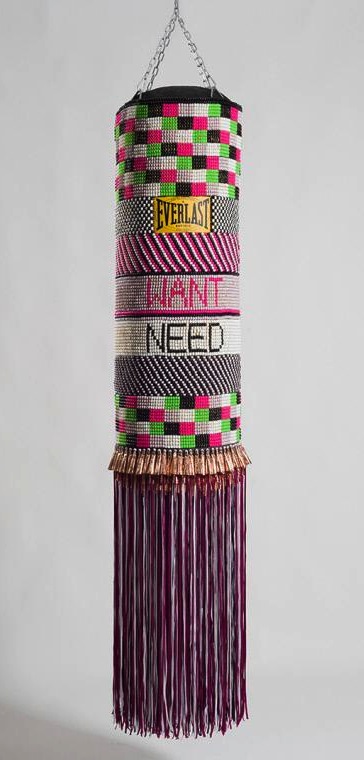
Jeffrey Gibson, What We Want, What We Need (2014).

Jeffrey Gibson, What We Want, What We Need (2014).

Holly Holm picked Ronda Rousey apart. An undefeated fighter is there to be defeated. We root for the upset. We relish the agony, the dark thrill of watching the takedown of a champion. We need someone who can knock the stuffing out of the hype. That’s what we got. It’s what we wanted, and what we needed.

Boxing Painting

This is what happens when you google “Jackson Pollock” and “boxing.”

CrossFit Performance

https://vimeo.com/38662094

David Getsy writes about Amber Hawk Swanson’s work in “Queer Exercises: Amber Hawk Swanson’s performance of Self Realization” (in GLQ‘s fall 2013 issue, which I edited). I can’t get enough of this.

Passions United, a review

The bored room.

A FIFA boardroom, in which passions are united.

United Passions is fascinating. Not as a movie, of course. FIFA’s 30 million-dollar self-portrait is, instead, fascinating evidence. FIFA leaves its fingerprints on every aspect of the work’s form and content.

Structurally, the film stages a bold intervention against story-telling practice. United Passions demands that cinema catch up with the times: the dominant narrative form used by the people who govern our lives from conference rooms is that of the bullet-point presentation. This biography of a corporation thus appropriately takes the form of Powerpoint Cinema.

Blocks of information are presented in a static visual form, usually in a manner that is not entirely unlike this sentence: a passive presentation of the way things are. Randomly-generated transitions move the viewer from one information block to the next. A cause-effect relationship will be implied by the flow of one slide to the next. Sequencing is, in and of itself, all one needs in terms of structure. Information flashes across the screen; the audience is spared the burden of understanding and insight. This presentation of information is usually accompanied by an image grabbed through a google search.

One might call this a “lie-back-and-think-of England” approach to one’s audience.

This phrase, “lie-back-and-think-of England,” for the reader lucky enough to not know, refers to the advice given to women regarding the inevitability of sexual coercion in their married lives. United Passions gives us a new spin on that phrase, as several bullet points are dedicated to demonizing the men of the English Football Association. The English FA’s pomposity is here developed as a background — perhaps the only available background — against which FIFA leadership might indulge the idea that they are merely humble servants to the beautiful game. FIFA/the English FA: this the film’s most compelling face-off. Or perhaps I should say, “most compelling bullet-point sequence.”  The only thing that unites the passions of FIFA’s founding characters is their shared hatred of that other imperialist congress of entitled white assholes. (To be clear, true to its form, this is indicated in the film, rather than, say, written and acted.)

Passions United is admirably open about the scale of self-serving ambition that lies at the root of the organization. FIFA was founded, we are told, for the sole purpose of having total control over the game everywhere such control matters, mainly because a few European men were annoyed that a few English men were bitchy to them. Men in suits, largely indistinguishable from each other, declare that the only rules of the game that will matter are their rules, that the only associations that matter will be FIFA associations. Voilá! FIFA Article I: Football will not exist outside of FIFA. This naked desire for monopoly is presented by the film’s swelling score as a “win” for the game.

Sprinkled throughout Passions United (I can’t get enough of this title) is imaginative thinking which presents FIFA’s so-called political neutrality as a simultaneously anti-fascist and populist politics — e.g. a party sequence in which an English FA executive spews racist and sexist nonsense at a horrified woman (Rimet’s daughter, more on her below), a bizarre boardroom scene that recycles debunked myths regarding wartime matches (these stories are also so badly told that one can’t actually follow them anyway, so their veracity is perhaps less an issue than their coherence). These moments are reassuringly familiar as staple elements of FIFA’s pantry: bad faith and pure bullshit.

Of course, as a feminist football critic, I was pleasantly surprised to discover that women are not only not forgotten by United Passions, they are all over its Powerpoint script, as is, shall we say, the idea of Africa.

The film confirms something we have long suspected: women and Africa occupy similar, even perhaps the same symbolic territory for FIFA. The film wonderfully maps out FIFA’s psychopathology so that we might better understand the exact roles that women and Africa play in the organization’s self-understanding. Women and Africa appear in United Passions as spaces of conquest, ownership, and creepy intimacy.

Africa functions as a scapegoat for FIFA’s corruption. One scene (one bullet-point) identifies Africa’s increased participation in FIFA as a “pandora’s box”—Africa functions in this film at once as a territory to be rescued, the locus of all foul play, as cash cow, and as a trophy. Women operate as both an alibi guaranteeing FIFA’s good intentions and, also, as evidence demonstrating the nature of FIFA’s bad intentions.

This slideshow requires JavaScript.

The daughters of Jules Rimet and Sepp Blatter are given a shocking amount of screen time.

Nary a scene happens without one or the other fille: they are represented as essential conversation partners—the people with whom Rimet and Blatter talk out all of their ideas—within the script they are, really, the only people that these patriarchs can trust. This creates a little confusion. Normally, when a man talks this much at a woman in a film, it is because she is the object of his sexual interest; possession of her functions as an affirmation of his phallic power.

In short, the father-daughter partnerships of United Passions are startlingly incestuous. This is in no small part because Rimet, played by Gerard Depardieu, constantly puts his hands on his daughter (played by Jemima West), and because in at least one scene, in which the two are standing in an empty, large open public space, they stand so closely that Depardieu’s belly touches poor West. It is also because both women “characters” (that is really not quite the right word for them) function as fluffers: their sole function is to pump up Daddy’s ego. Take one of the most infamous lines of the film—as Rimet worries that playing a World Cup during the Great Depression might be wrong, his daughter says: “When have dreams ever been appropriate?” Indeed.

I appreciate the way that United Passions re-envisions Hollywood casting practices, in which women young enough to be the daughters/granddaughters of the male lead will be cast as their romantic object of interest as if such sexual relationships were fun to watch. Here, at least, that romance is called out as fundamentally incestuous—and it is presented as extremely uncomfortable viewing.

But this perhaps also reflects FIFA’s actual world, in which women can never function as equal partners, or should I say co-conspirators? The only appropriate position for a woman is as a “daughter” to FIFA’s “daddy.” Lie Back…

[I now have to wash out my eyeballs and scrub down my brain.]

Readers totally unfamiliar with the most banal conventions of the sports film might be surprised to learn that the film’s narrative superstructure is provided by a joyous pick-up game, played by children who have taken over a dusty pitch in a worn-out stadium on the edge of a city in an “emerging” nation. They are the children of the world—one of every color, and even one of the “other” gender (fair-skinned, of course). This sequence, which opens and closes the film — a “bullet point” which declares the game’s universal appeal — was filmed in Azerbaijan, whose government generously funded Passions Uniting Racketeer Influenced and Corrupt Organizations, and is therefore listed as a production partner.

This slideshow requires JavaScript.

This sequence, ironically depicting exactly the kind of game over which FIFA has no control whatsoever, as well as a kind of match (mixed-gender football) that FIFA explicitly prohibits, is the part of United Passions that one might equate with the google-search-produced image dropped into a Powerpoint slide. Of course, at first the lone girl resigns herself to playing goal. And she doesn’t know how to defend, apparently, because she makes barely a gesture to blocking shots—accepting humiliation and uselessness as her gendered lot—until, at the last moment and for no particular reason, she takes the ball, dribbles it up the field, shoots and scores. Her teammates are overwhelmed with joy. “Who would have believed this!” The film’s audience is asked this in a voice-over—an editorial accident superimposes the surprise that FIFA has lasted as long as it has, “accomplished” as much as it has, over an image which suggests a community’s surprise that a girl knows how to kick a ball.

Embedded below, the film’s conclusion. “Enjoy” it while you can.

I Hate FIFA More Than You Do, a poem

I hate Sepp Blatter

as much as I hated Jesse Helms, may that homophobic, racist monster rot in hell.

I hate FIFA

like I hate the contemporary art market, which is run by bankers and assholes.

I hate Sepp Blatter

more than I am disgusted by rotten meat.

I hate FIFA

in exactly the same way that I hate Capitalism.

I hate Sepp Blatter

without the pleasure of hating a villain in a movie.

I hate FIFA

because FIFA hates women.

I hate Sepp Blatter

more than I hate Manchester United, a club I don’t hate as much as one should.

I hate FIFA

with a white-hot passion that seems to know no scale.

I hate Sepp Blatter

only slightly less than I hate the assault on structures that do not service the rich, which is still a high order of hate.

I hate FIFA

more than I hate the sexism of my workplace, which surprises me.

I hate Sepp Blatter

more than you do, unless you aren’t on FIFA’s payroll, in which case

You hate FIFA as much as, maybe even more than I do.

FIFA can’t even handle its SEXISM right

Screen shot 2014-10-28 at 7.16.22 PM

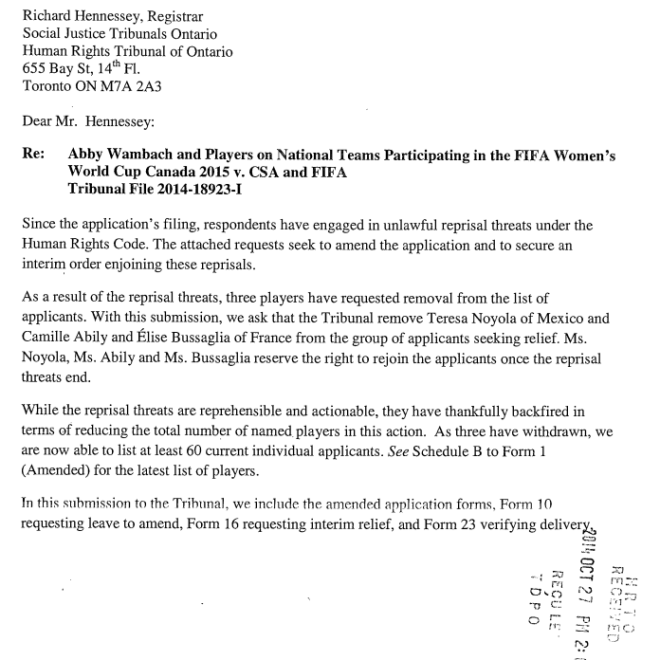
Most sex discrimination complaints break down not around the original discriminatory action, but around retaliation. Threats of retaliation escalate the problem created by the defendant’s sexism. They demonstrate a disregard for the process; they are easier to track and to prove. They are, also, against all sorts of laws.

So how does FIFA respond to the sex discrimination complaint filed by 40 women players, regarding FIFA and CSA’s decision to play the Women’s World Cup on artificial turf?

FIFA threatens players from a handful of FAs that it thinks it can bully—Mexico, Costa Rica and France (which wants to host the next women’s World Cup). Officials told women on these teams to withdraw their names from the complaint or they would not be selected to play and, in the case of France, their country might risk losing its future bid.

Result: said players withdraw their names—and file a retaliation complaint. And the number of players signing on to the original complaint jumps to 62.

Read the retaliation complaint here: Oct 2014 Letter-to-human-rights-tribunal-re-threats-against-players.

Good for the Canadian Gander, Too Good for the Goose

Screen shot 2014-10-05 at 7.39.09 PM


Point 33 from Players v CSA/FIA.